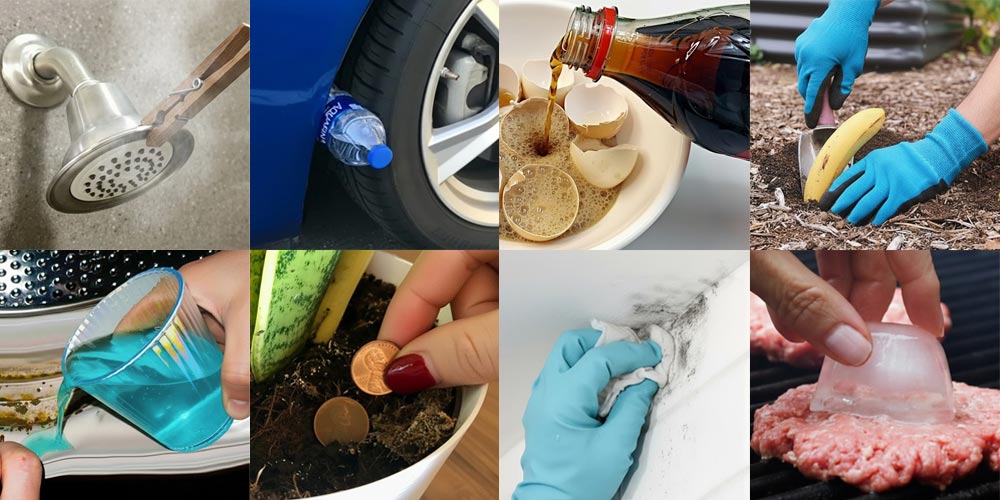




Edison’s Odd “Brain Hack” Is Going Viral — People Call It Genius!
 ||
||Editorial & Advertiser Disclosures
This website is a free resource that strives to share helpful ideas, insights, product recommendations, and comparisons — all grounded in hundreds of hours of research. We accept and may receive advertising compensation from companies whose products or services are featured or linked on our website.
Our partners cannot pay us to guarantee favorable reviews of their products or services.
The compensation may influence how and where certain products appear, including their order or placement on a page. When you purchase through our links, we may earn a small commission — at no extra cost to you. We also make an effort to find and share great deals and special offers whenever possible, so you can get more value from the products you love — without spending more.
Company listings and product mentions do not imply endorsement. We strive to provide accurate, helpful, and up-to-date information, but we do not include every product or provider available in the market.
We aim to make sure everything on our site is up-to-date and accurate as of the publishing date, but we cannot guarantee we haven't missed something. It's your responsibility to double-check all information before making any decision. If you spot something that looks wrong, please let us know.
All information, including pricing, product availability, and promotional details, is subject to change without prior notice. Except as expressly stated in our Terms of Use, all representations and warranties regarding the information presented on this site are hereby disclaimed.
We are not an investment advisor, financial consultant, medical professional, or legal advisor. The content provided on this website is for informational and educational purposes only. You should always seek independent professional advice before making financial, medical, or legal decisions.
Advertising & Privacy Practices
We value your privacy and are committed to transparency in how we collect and use data. We work only with trusted and reputable advertising partners to display relevant ads and measure performance based on anonymized information about your activity on our website and other websites.
This may include limited, anonymized data shared with partners such as Google, Meta (Facebook), YouTube, and others to improve ad relevance and analytics. No personally identifiable information is shared, and all data used for advertising purposes is anonymized and handled in accordance with our Privacy Policy.
This website is independent and is not affiliated with, endorsed by, or sponsored by Google, Meta (Facebook), YouTube, or any other third-party platform mentioned on this site. Trademarks and brand names appearing on this site belong to their respective owners, and no implied or expressed endorsement of our website or its services is intended.
About the Author
Daniel Bray has always believed that life gets easier when you understand how things work. A researcher by nature, he grew up learning from old-world wisdom, practical problem-solving, and later, the fast-growing world of knowledge found online. For more than two decades, he has collected and tested practical advice passed down through generations, time-tested life hacks, modern gadgets, and everyday experiments he discovers on the internet.
Daniel isn’t an inventor—he’s a lifelong seeker of clever ideas and simple solutions that make life better. His work covers everything that improves daily living: smart habits, personal health, self-reliance, technology, money management, household efficiency, and clearer thinking.
Whether he’s figuring out how a tool works, exploring forgotten techniques, or breaking down expert advice, his approach is always the same: stay curious, stay honest, and always verify. He believes progress can never come from ignorance or shortcuts—it comes from learning and consistent action.
Related articles
Image from the video presentation
While exploring archived research notes and modern neuroscience forums, our team discovered a simple “7-second brain ritual” that keeps appearing across different decades of cognitive training methods.
A researcher recently pointed out that this type of brainwave activation supports clearer thinking and sharper focus — and ever since, thousands of people online have started trying it at home.
Users say they feel more alert, more focused, and mentally “lighter” shortly after trying it — and the story behind it is surprisingly interesting.
Tap below to watch the video presentation and see how it works!
SCIENTIFIC REFERENCES: For all studies and detailed scientific references, please visit the official websites of the products by following the corresponding links.
1. Crivelli-Decker J., Hsieh L.-T., Clarke A. & Ranganath C., (Year). Theta oscillations promote temporal sequence learning. Neurobiology of Learning and Memory, Volume Number(Page Numbers). https://doi.org/10.1016/j.nlm.2018.05.001
2. Zielinski, M. C., Tang, W., & Jadhav, S. P. (2020). The role of replay and theta sequences in mediating hippocampal-prefrontal interactions for memory and cognition. Hippocampus, 30(1), 60-72. https://doi.org/10.1002/hipo.22821
3. Henao, D., Navarrete, M., Valderrama, M., & Le Van Quyen, M. (2020). Entrainment and synchronization of brain oscillations to auditory stimulations. Neuroscience Research, 156, 271-278. https://doi.org/10.1016/j.neures.2020.03.004
4. Venkatraman, R.. You're 96 Percent Less Creative Than You Were as a Child. Here's How to Reverse That. Inc.com. https://www.inc.com/rohini-venkatraman/4-ways-to-get-back-creativity-you-had-as-a-kid.html
5. Herrmann, C. S., Strüber, D., Helfrich, R. F., & Engel, A. K. (2016). EEG oscillations: From correlation to causality. International Journal of Psychophysiology, 103, 12-21. https://doi.org/10.1016/j.ijpsycho.2015.02.003
[...]
Enjoyed this? Share it!
Share your reaction!